A Small Cultural Exchange, Planned Around Shared Making
Plan a small cultural exchange around shared making, with clear invitations, thoughtful questions, and room for songs, phrases, and craft traditions on their own terms.
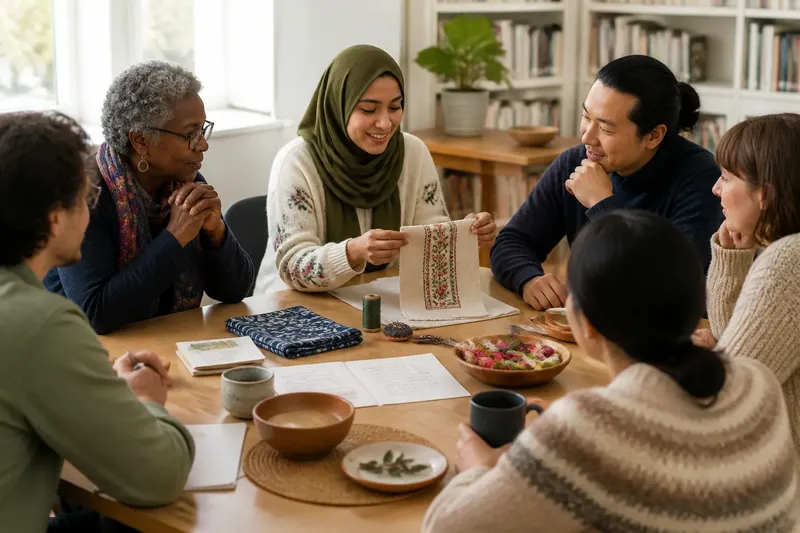
A small cultural exchange can begin with a paper scrap, a remembered phrase, or a tune someone hums while setting out cups. The useful part is not the performance; it is the making and explaining that let people meet one another without asking anyone to represent a whole culture.
Keep the gathering modest in purpose and easy to decline. Invite each person to bring one small thing they can explain in their own terms: a song, phrase, craft practice, or object connected to how something is made. The host’s job is to make space for questions, not to turn guests into exhibits.
Shared making gives the gathering a practical center
Conversation about identity can become abstract quickly. A piece of embroidery, a line from a lullaby, or a greeting used between relatives gives the group something specific to attend to. The item is a starting point, not evidence that its maker speaks for everyone who shares a language or tradition.
Choose a format that suits the materials and the people attending. A craft demonstration might involve paper, thread, or clay, while a song or phrase can be shared through listening, repetition, or a short explanation of when it is used. Nothing needs to be produced for the group to take home.
Shared making does not mean everyone must make the same thing. One person may show how a pattern is arranged; another may teach a phrase and explain how its tone changes with context. Participants can also listen without joining an activity.
The invitation should set expectations without assigning roles
Explain the gathering in plain language: guests may bring one item or practice, participation is optional, and questions are welcome after each contribution. Ask people to describe what they personally know, rather than asking them to supply a general account of a country, religion, or community.
Offer alternatives for anyone who would rather not bring a personal or culturally significant object. A participant might share a recipe note, a phrase learned from a neighbor, or a small technique they are comfortable demonstrating. Make clear that passing is a complete answer, not a problem the host needs to solve.
Say you are hosting a few neighbors in a library meeting room and one guest wants to share a family sewing pattern. You could invite them to bring a sample or simply describe how the pattern is used, then reserve time for questions they are happy to answer. The expected result is a conversation shaped by that guest’s boundaries, not a demand for a polished lesson.
Questions work best when they follow the contribution
Let the person finish before opening the discussion. A short pause gives listeners time to notice what they want to ask, and it prevents the host from translating the contribution into a tidy moral before its maker has finished speaking.
Useful questions are concrete and open-ended: “When might someone use this phrase?” or “What part of the process do you enjoy?” Avoid questions that ask one guest to settle a broad dispute or explain what millions of people believe. If a question feels too personal, the speaker can redirect it or decline.
Hosts can help by making the rules visible but light. Invite questions about the item or practice, discourage interruptions, and allow the person sharing to decide how much context to give. There is no need to correct every unfamiliar detail or fill every quiet moment.
Small choices keep the exchange welcoming
Before the gathering, consider the room, access needs, and materials. A circle of chairs can make listening easier; a table helps with paper or craft materials. If food is involved, ask about ingredients and preferences rather than assuming a dish is suitable for everyone.
- Keep the guest list small enough for each person to speak without rushing.
- Ask contributors what name they use for the item or practice.
- Check whether recording, photographing, or sharing materials afterward is welcome.
- Offer a way to participate by listening, asking a question, or passing.
- Leave time at the end for informal conversation rather than adding another presentation.
What is not worth the effort is dressing the gathering up as a miniature festival, complete with costumes, flags, and a packed schedule. That can shift attention from what people chose to share toward what an audience expects them to symbolize. A few chairs and an unhurried pace are usually more useful.
How should a small cultural exchange handle common questions?
What can someone bring if they do not want to perform?
They can bring an object, a written phrase, a material sample, or simply a story about how something is made or used. Listening without bringing anything is also a valid way to take part.
How can the host prevent one person from representing a whole culture?
Introduce each contribution as that person’s account and avoid asking them to speak for a nation, language group, or community. If a broader question comes up, acknowledge that views and practices vary rather than pressing the guest to settle it.
Should participants teach one another a song or craft?
Only if the person sharing wants to teach and the activity suits the group. They can demonstrate one small part, explain the process, or invite questions without turning the contribution into a lesson.
What if a question makes someone uncomfortable?
The speaker can decline, change the subject, or answer only the part they choose. The host can support that boundary calmly and move on without asking the person to justify it.
Let the exchange remain unfinished
A gathering built around shared making does not need a grand takeaway. People may leave remembering a phrase, a stitch, or the way someone described a familiar object differently. Those details can stay particular; they do not have to become a verdict about cultural difference.
When planning a small cultural exchange, leave room for what participants actually bring and resist filling every gap with explanation. The most useful final gesture may be to thank each person, ask whether they want their contribution shared beyond the room, and let the conversation continue only if they choose.